Spellblade
A Human swings a strange sword through the air at an orc, the strike booming with thunder on impact sending the orc flying.
A Tiefling wielding a wicked looking longbow smirks as with one shot loosed it strikes down a gang of goblins.
A serene looking Elf strides forth surrounded by whirling blades while also wielding blades of shadow and darkness before cutting down an Ogre in a swirl of strikes.
Living Weapons
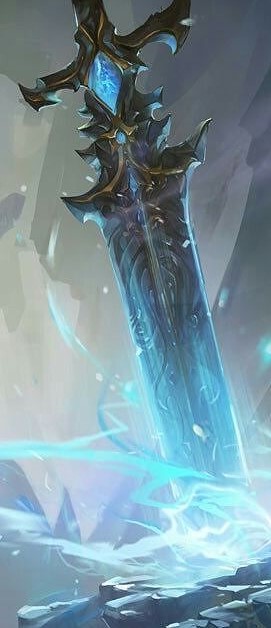
Spellblades through their study and through many trials and tribulations have managed to forge a Living Weapon, it's form is malleable and it's sense of self like a new born that will grow and develop along with it's wielder. Spellblade's and their Living Weapons are true partners, with each lending their strength to one another learning from one another and strengthening one another.
Spellblades are a rarity the Arcane Lore in the creation of their Living Weapons has been in many worlds lost to the passage of time, in some worlds however they are numerous, such as Occterria where in the nation of Valkaedrium their order has been reborn and are one of that Nation's many oddities.
True Partners
Spellblades are as much their Living Weapon as their Living Weapon is them - without one the other struggles, yet together they represent a truly dangerous force, yet for the most part they are rarely seen. In the few worlds where they are present they are often seekers of Arcane Knowledge, their goal in most cases to find the more esoteric components in the creation of a Living Weapon so that they may in time train more of their kind.
Forging a Bond
The Ancient Lore used in the creation of the Living Weapons in many worlds is lost to the sands of history, however those who have uncovered or rediscovered this carefully guard the secrets, even from other Spellblades until they have proven themselves worthy.
What little is known is near the end of the Living Weapon's creation the chosen wielder, a fact that said wielder is unaware of is pitted in a trial near the place of the weapon's forging a gruelling and difficult trial designed to bring out the future wielder's desire and emotion, to truly test the mettle of their being. These feelings and emotions are the catalyst that along with the esoteric parts of their creation kindle the Living Weapon into consciousness, and birth it as a personality replete with it's own powers.
Creating a Spellblade
When making a Spellblade, consider what trials your character has undertaken, how they were chosen and what sort of Living Weapon they unknowingly helped create. Perhaps your character while in an old wizard's library touched an unusual artefact and was immediately taken on by the wizard for unknown purposes. Perhaps your character was under the tutelage of another Spellblade in a world where they are more common, unsure if they were even worthy of such an honour. Were you always adventurous before the connection with your Living Weapon was made or have you as a result of your new role taken up the adventuring life in a quest for mutual understanding with your Living Weapon.
Quick Build
You can make a Spellblade Quickly by following these suggestions

The Spellblade
| Level | Proficiency Bonus | Features | Companion Weapon | Cantrips Known | Spells Known | 1st | 2nd | 3rd | 4th | 5th |
|---|---|---|---|---|---|---|---|---|---|---|
| 1st | +2 | Living Weapon, Arcanovision | - | — | — | — | — | — | — | — |
| 2nd | +2 | Combat Companion, Fighting Style, Spellcasting | 1d4 | 2 | 2 | 2 | — | — | — | — |
| 3rd | +2 | Discipline, Surging Power | 1d4 | 2 | 3 | 3 | — | — | — | — |
| 4th | +2 | Ability Score Improvement | 1d4 | 2 | 3 | 3 | — | — | — | — |
| 5th | +3 | Discipline Feature, Arcane Assimilation | 1d6 | 3 | 4 | 4 | 2 | — | — | — |
| 6th | +3 | Arcing Spells | 1d6 | 3 | 4 | 4 | 3 | 2 | — | — |
| 7th | +3 | Discipline Feature, Weapon Enhancements | 1d6 | 3 | 5 | 4 | 3 | 2 | — | — |
| 8th | +3 | Ability Score Improvement | 1d6 | 3 | 5 | 4 | 3 | 2 | — | — |
| 9th | +4 | Weapon Vision | 1d8 | 3 | 6 | 4 | 3 | 2 | — | — |
| 10th | +4 | Discipline Feature | 1d8 | 4 | 6 | 4 | 3 | 2 | — | — |
| 11th | +4 | ─ | 1d8 | 4 | 7 | 4 | 3 | 3 | — | — |
| 12th | +4 | Ability Score Improvement | 1d8 | 4 | 7 | 4 | 3 | 3 | — | — |
| 13th | +5 | ─ | 1d10 | 4 | 8 | 4 | 3 | 3 | 1 | — |
| 14th | +5 | Discipline Feature | 1d10 | 4 | 8 | 4 | 3 | 3 | 1 | — |
| 15th | +5 | ─ | 1d10 | 4 | 9 | 4 | 3 | 3 | 2 | — |
| 16th | +5 | Ability Score Improvement | 1d10 | 4 | 9 | 4 | 3 | 3 | 2 | — |
| 17th | +6 | ─ | 1d12 | 4 | 10 | 4 | 3 | 3 | 3 | 1 |
| 18th | +6 | Discipline Feature | 1d12 | 4 | 10 | 4 | 3 | 3 | 3 | 1 |
| 19th | +6 | Ability Score Improvement | 1d12 | 4 | 11 | 4 | 3 | 3 | 3 | 2 |
| 20th | +6 | Manifested Blades | 1d12 | 4 | 11 | 4 | 3 | 3 | 3 | 2 |
Class Features
As a Spellblade, you gain the following class features
Hit Points
- Hit Dice: 1d10 per Spellblade level
- Hit Points at 1st Level: 10 + your Constitution modifier
- Hit Points at Higher Levels: 1d10 (or 6) + your Constitution
Proficiencies
- Armor: Light Armor, Medium Armor, Shields
- Weapons: Simple Weapons, Martial Weapons
- Tools: None
- Saving Throws: Constitution, Intelligence
- Skills: Choose two from Arcana, Athletics, History, Insight, Investigation, Nature, Perception, Persuasion
Equipment
You start with the following equipment, in addition to the equipment granted by your background:
- (a) Scale Mail or (b) Leather Armor
- (a) a Longsword or (b) any Martial Melee Weapon
- 5 Javelins
- (a) Scholar’s Pack or (b) Explorer’s Pack
- Your Living Weapon

Living Weapon
Starting at 1st level, you have forged a bond with a living weapon, a sentient item which grows as you do. Your living weapon takes the form of a weapon you are proficient with. Your living weapon has its own personality, goals, and flaws.
The weapon is partially born of your soul, so it takes after some of your characteristics. Your weapon shares your alignment, Intelligence, Wisdom and Charisma scores. It does not have Strength, Dexterity, or Constitution scores. The living weapon has proficiency in any one skill of your choice that uses Intelligence, Wisdom, or Charisma. Whenever you gain the ability score improvement class feature, your Living Weapon may also choose to improve one of its scores by 2, or two of its scores by 1 (to a maximum of 20)
Your weapon can hear and see out to a range of 60 feet, can telepathically communicate with anyone within that range or speak out loud if it so chooses. You can use a bonus action to cause this weapon to teleport into your hands, regardless of distance or plane. While holding your living weapon, you can perform an arcane ritual over the course of 1 minute. The weapon can change into any other weapon you are proficient with.
If your living weapon is in the form of a weapon that has the ammunition property, you can ignore it, as your weapon generates its own ammunition as you fire it, which disappears after the attack.
Arcanovision
Starting at 1st level, through your bond, your Living Weapon shares it’s magical insights with you, using it’s inherently magical nature to see other magic clearly.
Your Living Weapon may gain access to a special sense, that it can activate using your action. This special sense functions identically to the Detect Magic spell, however instead of the normal duration of the spell you have a pool of time you must expend instead. This pool is equal to your Spellblade level x 3 minutes, and this pool replenishes when you complete a Long Rest.
You may instead choose to expend 5 minutes of your pool of Arcanovision to have your Living Weapon use its reaction to cast the Identify spell on an object it is touching without requiring material components.
Combat Companion
At 2nd level, you've learned that your living weapon isn't merely a tool in battle but an active participant and ally, enhancing and protecting you as you work together.
Your Living weapon has a reaction that it can take each round of combat while you are wielding it. It regains this reaction at the start of each of your turns and can only use it in ways outlined in this feature, unless otherwise specified.
When you make an attack using your living weapon, it can use its own reaction to add 1d4 to the attack roll. Alternatively, when you are targeted by weapon attack, your living weapon can use its reaction to add 1d4 to your AC against that attack, potentially causing it to miss.
The living weapon can wait until after you roll the d20 before deciding to use this reaction, but must decide before the DM says whether the roll succeeds or fails.
Your living weapon can add a die to one of your rolls this way a number of times equal to its Intelligence modifier (a minimum of once). It regains any expended uses when you finish a long rest.
Your Companion Weapon die changes when you reach certain levels in this class. The die becomes a d6 at 5th level, a d8 at 9th level, and a d10 at 13th level, and a d12 at 17th level.
Fighting Style
You adopt a particular style of fighting as your specialty. Choose one of the following options. You can't take the same Fighting Style option more than once, even if you get to choose again.
Archery
You gain a +2 bonus to attack rolls you make with ranged weapons.
Defense
While you are wearing armor, you gain a +1 bonus to AC.
Dueling
When you are wielding a melee weapon in one hand and no other weapons, you gain a +2 bonus to damage rolls with that weapon.
Great Weapon Fighting
When you roll a 1 or 2 on a damage die for an attack you make with a melee weapon that you are wielding with two hands, you can reroll the die and must use the new roll, even if the new roll is a 1 or a 2. The weapon must have the two-handed or versatile property for you to gain this benefit.
Two-Weapon Fighting
When you engage in two-weapon fighting, you can add your ability modifier to the damage of the second attack.
I'm not just any old Weapon, I'm a Living Weapon!
Your Living Weapon is more than a mere tool of battle, it has its own personality along with its own likes and dislikes. Your living weapon considers you its partner and happily cooperates with you on most things, though may have its own separate opinion on the matter and won’t be too subtle about it.
If a significant conflict does arise, the weapon may refuse to communicate or allow use of one of your features for a short time, Though such disagreements are rare.
You may roll on the Living Weapon Personality Table later in this document to separately determine your weapons goals, quirks and flaws. You may instead create your own or simply choose.
Spellcasting
Through your study and experimentation you have gained an affinity for magic. See chapter 10 for the general rules of spellcasting and the list at the bottom for the Spellblade spell list.
Cantrips
At 2nd level, you know 2 Cantrips of your choice from the Spellblade spell list. You learn additional Spellblade Cantrips of your choice at higher levels, as shown in the Cantrips Known column of the Spellblade table.
Spell Slots
The Spellblade table shows how many spell slots you have to cast your spells of 1st level and higher. To cast one of these Spellblade spells, you must expend a slot of the spell's level or higher. Your regain all expended spell slots when you finish a long rest. For example, if you know the 1st level spell Ice Knife and have a 1st-level and a 2nd-level spell slot available, you can cast Ice Knife using either slot
Spells Known of 1st level and higher
You know two 1st-level spells of your choice from the Spellblade spell list. The Spells Known column of the Spellblade table shows when you learn more Spellblade spells of your choice. Each of these spells must be of a level for which you have spell slots. For instance, when you reach 3rd level in this class, you can learn one new spell of 1st or 2nd level. Additionally, when you gain a level in this class, you can choose one of the Spellblade spells you know and replace it with another spell from the Spellblade spell list, which also must be of a level for which you have spell slots.
Spellcasting ability
Intelligence is your Spellcasting ability for your Spellblade spells, since you learn your spells through dedicated study and memorization. You can use your intelligence whenever a spell refers to your spellcasting ability. In addition, you can use your Intelligence modifier when setting the saving throw DC for a Spellblade spell when you cast and when making an attack roll with one
Spell Save DC
Spell attack modifier
Spellcasting Focus
You must use your Living Weapon as a spellcasting focus for your Spellblade spells, in addition you can perform the somatic components of spells even when you have weapons or a shield in one or both hands.
Discipline Styles
Starting at 3rd level, you choose which discipline style defines your connection to your Living Weapon. Your choice reflect the training and preparations in this certain style finally manifesting themselves. You may choose from Prowess, Amplification or Disruption.
Surging Power
Starting at 3rd level, during battle your Living Weapon surges with arcane power, fuelling both you and itself with temporary energy. When you land a successful weapon attack using your Living Weapon or land a spell attack using a spell from the Spellblade spell list against a hostile creature, you gain 1 Surge Charge.
Your Surge Charges are lost when you complete a short or long rest, and you cannot have more charges than your levels in this class, when you reach level 20 in this class you no longer have this limit.
You may expend these charges to fuel some of your Spellblade features and abilities. One of these features is your Weapon Arts, which are special cantrips only you can learn. You gain two these cantrips at this level, which do not count towards your number of known cantrips. You learn one additional Weapon Art at 7th, 11th, 15th and 19th level.
Ability Score Improvement
When you reach 4th level, you can increase one ability score of your choice by 2, or you can increase two ability scores of your choice by 1. As normal, you can't increase an ability score above 20 using this feature.
Arcane Assimilation
Starting at 5th level, your Living Weapon is now able to take the properties and abilities of other Magical Weapons. You may now absorb magical weapons, through an arcane ritual performed over the course of a short rest. Your Living Weapon can only benefit from the properties of one magical weapon at a time and cannot absorb another sentient item or artefact in this way.
When you complete a short or long rest, you may choose which magical weapon that Your Living Weapon may gain properties from, among the items it has absorbed previously
In addition your Living Weapon counts as magical for the purposes of overcoming resistances.
Arcing Spells*
At 6th level, when you would deal damage to a single target with a Spellblade spell, a Weapon Art or a Spellblade class feature with multiple damage dice, you may split any number of those dice to another target within 10 feet. You may further split the damage to additional targets within 5 feet of the second target. This cannot affect the same target more than once and must deal at least one dice of damage to a target before splitting to another target.
Weapon Enhancements
At 7th level, your living weapon continues to grow and change as the bond between you grows. You may choose two Weapon Enhancements option of your choice (see "Weapon Enhancement Choices" below)
Additionally, when you gain a level in this class, you can choose one of the enhancements you know and replace it with another enhancements that you could learn at that level.
A level prerequisite in an enhancements refers to Spellblade level, not character level.
You gain an additional Weapon Enhancement option of your choice when you reach certain levels in this class: 10th, 15th, and 18th level.
Duplication
As a bonus action, you can have your Living Weapon split itself into two separate weapons, or a weapon and shield. In addition your Living Weapon may now absorb Shields, both mundane and magical which are counted separately from weapons via the Arcane Assimilation feature.
Weapon Rack
Your Living Weapon can now act as if it was a Bag of Holding, absorbing items that touch it as an action, with a capacity of 500lb. It can absorb items no larger than a 5ft cube in any one dimension. Additionally as an Action you may magically draw any item within 30 feet that fits the above criteria into your Living Weapon. Items that are being held, worn, carried, or are heavier than 10lb are not drawn.
Weapon Ritual
You may cast spells with the Ritual Tag, as a Ritual.
Flexible Casting
Whenever you finish a short or long rest, you can replace one of the Spellblade cantrips you know with another cantrip from the Spellblade spell list, Additionally, you may also change Weapon Arts in a similar fashion.
Rebound
If your living weapon has the thrown property, it returns to your hand immediately after you complete a ranged weapon attack using it, in addition while your Living Weapon is in the form of a thrown weapon it's short range is doubled.
Overreaching*
Prerequisite: 10th level
The Range on your Arcing Spells increases by 5 feet on both the initial and additional targets. When you damage a creature with your Arcing Spells feature, you may add your intelligence modifier to that damage.
Featherweight Weapon
Prerequisite: 10th level
Your Living Weapon always counts as a Finesse Weapon no matter the form it takes.
Energising Strikes
Prerequisite: 15th level
For every successful hit with your Living Weapon you gain Temporary Hit Points equal to your Proficiency Bonus.
Weapon Realm
Prerequisite: 15th level, Weapon Rack
As an action you and your allies may touch your Living Weapon and be transported inside it. The weapon creates an extradimensional space equivalent to the Mordenkainen’s Magnificent Mansion spell. Your Living Weapon decides on the floor plan, decorations and the form the servants take, preferring a humanoid version of itself.
Weapon Vision
At 9th level, your bond with your Living Weapon deepens even further. Your Living Weapons senses increase out to a range of 120ft and the range at which you can telepathically communicate with your Living Weapon increases to a 1 mile radius.
While your living weapon is within 1 mile of you, as an action, you can see through your weapon’s senses until the start of your next turn, gaining the benefits of any special senses that your weapon has. During this time, you are deaf and blind with regard to your own senses.
You can also use your action to peer through the ammunition fired from your living weapon, as if seeing through the living weapons senses. The ammunition remains for 1 minute until it disappears.
Manifested Blades
At 20th level, you and your Living Weapon channel your arcane abilities together to summon a wall of blades. You may cast the Blade Barrier spell as an action. The spell does not require concentration from you, and remains for its full duration, or until you dismiss it with a bonus action.
You may change the spell’s dimensions from among the options as described in the spell using a Bonus Action, or choose to move it up to 30 feet in any direction. You may use this feature once per short rest.
Discipline of Disruption
The teachers of the Discipline of Disruption originally observed the power of Living Weapons to absorb magic, and continuously developed this ability further and further. Practitioners of this style can use their techniques to disrupt, nullify and destroy other magic users with ease. This led to the forming of the Spell Breakers, powerful shock-troops, assassins and bodyguards.
Since the early days of this Discipline’s development, Spell Breakers have since refined their techniques to be useful in controlling any number of opponents, rather than just enemy mages.
This style forms a balance of both melee and magic, rather than focusing on one or the other, as with the other styles. Spell Breakers often consider the other disciplines too narrow and close minded for their tastes.
Disruptive Attunement
Starting at 3rd level, you can apply negative effects to your enemies using your Living Weapon’s elemental powers. You may change the bonus damage type of your Surging Power feature, at will as a free action.
In addition, when you deal damage using your Surging Power damage dice, you may choose to apply a bonus effect based on which damage type you dealt, as shown below. The target must succeed on a Constitution saving throw versus your Spell DC or be affected by the bonus effect until the start of your next turn.
- Acid -The target has its regular vision reduced to a 30ft radius and is blind beyond that range, as you splash acid into its eyes. If the target benefits from any special senses, other than Darkvision, those senses are unaffected.
- Cold - The target has its speed reduced by 10ft, as you rime it with frost.
- Fire - The target has disadvantage on its next weapon attack, as painful burns distract them.
- Lighting - The target cannot take reactions, as they are briefly dazed by sparks.
- Poison - The target has disadvantage on their next ability check, as noxious fumes weaken their resolve.
- Thunder - The target cannot concentrate on spells, as you slam them with sonic force. If it is concentrating on a spell when hit, it must make its concentration check with disadvantage.
Extra Attack
Beginning at 5th level, you can attack twice, instead of once, whenever you take the Attack action on your turn.
Disruptive Surge
At 7th Level you may apply your Surging Power damage to any attack made with your Living Weapon, and may choose the damage type before rolling the attack.
Spell Hunter
Also at 7th level, your ability to disrupt magic allows you to see through the pathetic attempts of mages to hide from you. You have advantage on saves or checks made to detect and or see through any Illusion spells of a level equal to or lower than your proficiency bonus. You must be within 30 ft of the illusion to benefit from this feature.
Feedback
At 10th level, when you hit with your Living Weapon, you can attempt to disrupt the targets ability to cast magic. If the target fails its Constitution saving throw against your disruption effect, you may expend 2 Arcane Charges to have the target lose one of their lowest level remaining spell slots, dealing bonus psychic damage on the attack equal to 1d4 x the level of the spell slot burned.
Living Weapon: Disruptive Defence
At 14th level, your Living Weapon begins to automatically absorb hostile magic and use it against your foes. You have advantage on saving throws against spells & magical effects. In addition, when you take damage from a spell or magical effect, you have advantage on your next weapon attack until the end of your next turn, instead of this effect, you may choose instead to gain an Arcane Charge
Empowered Disruption
At 18th level, your control of the battlefield goes beyond your connection with your Living Weapon. When one of your spells or abilities deals damage of a type listed in your Disruptive Attunement feature, you may also apply the appropriate effect listed, in addition to the spell or abilities normal effects.
Discipline of Prowess
The style of Prowess was founded and inspired by an eldritch knight, whose connection to his bonded weapon grew so strong that it transformed into a Living Weapon. Since then, the Style of Prowess have always considered themselves more as warriors, than mages or spellcasters. They are more fully connected and attached to their living weapon than the other styles, considering themselves true disciples of the blade. They consider their weapon a true partner, an almost symbiotic relationship, where both parties give and share equal amounts of magic.
The most martial and knightly of the disciplines, they are often known as the Blade Guard, who stand side by side with eldritch knights and paladins as a powerful legion of arcane warriors.
Martial Attunement
Starting at 3rd level, you gain Proficiency in heavy armour. Additionally, the strength requirement for heavy armour is reduced by 3 for you. Finally, as a free action once per turn, you may transform your Living Weapon into another weapon form, instead of having to complete the 1 minute transformation ritual.
Sundering Strike
Also at 3rd level, you may feed your Living Weapon arcane power in order to cleave through enemy ranks with arcane power. Once per turn, when you hit with a creature with a melee weapon attack using you Living Weapon, you may expend 5 Arcane Charges to make the attack a cleaving strike. As part of the attack, you may also target any number of other creatures within your reach with the same attack roll. If the original attack roll would hit one of the other targets in range, that creature takes half the damage received by the initial target (rounded down). If a targeted creature who is in range is not hit by the cleave, it counts as a missed attack against them.
If your Living Weapon is in the form of a Ranged Weapon instead, this feature affects all creatures within 10ft of your initial target.
Extra Attack
Beginning at 5th level, you can attack twice, instead of once, whenever you take the Attack action on your turn.
Momentum
At 7th level, you and your Living Weapon make synchronized strikes, leading to perfect rhythm and momentum. When you miss with a weapon attack made with your Living Weapon, you gain a +1 stacking bonus to hit and damage that on your next weapon attack. This bonus resets when you next hit a creature with an attack.
Transformation Style
Also at 7th level, you gain the ability to change your fighting style as freely as your Living Weapon changes its own form. When your Living Weapon changes forms into a different weapon, you may also switch your current Fighting Style to a different choice from among those listed in the ‘Fighting Style’ feature above.
Blade Guard
At 10th level, you gain the ability to defend your allies with offensive force. When an allied creature within 15ft of you, that you can see, is hit by a melee weapon attack, you may use your reaction and 4 Arcane Charges to make a weapon attack against the creature who hit your ally, as long as you can see the attacker and your weapon has the reach or range to do so.
Living Weapon: Collective Power
At 14th level, your living weapon has learned to manifest many forms at once, gathering its collective magic strength. Your Living Weapon can benefit from the magical bonuses and features of all magical weapons it has previously absorbed at the same time, up to a limit of 3 items combined at once. These features and bonus effects must be appropriate to your Living Weapon’s current form(as determined by the DM) in order to function and you must be attuned to all the items you are drawing effects from.(for example, you cannot benefit from a sword of sharpness while your Living Weapon is not a slashing weapon and you cannot benefit from an effect of a magic weapon you aren’t attuned)
If your Living Weapon has two or more abilities or bonuses which are similar but gained from multiple sources, you must choose one of these features to benefit from. They do not stack. For example, if you Living Weapon has absorbed a +2 longsword and a +1 dagger, you must choose one of these bonuses to gain, rather than adding them together. This includes properties that allow the weapon to gain bonus damage dice on hit. For example, you cannot benefit from the bonus fire damage provided by a Flametongue at the same time as benefiting from the bonus damage dealt by an Oathbow’s effects, you must choose which one to apply to the attack.
Implacable Duellist
At 18th level, your martial skill outmatches any opponent who fights on an even playing field.
Once per turn when you target a creature with an attack, and that creature is wielding a weapon of the same weapon type as you, you may gain one stack of your Momentum.
Your Momentum stacks now no longer reset when you hit a creature, they instead remain until you spend more than one round not attacking a hostile creature or until you switch the weapon type of your Living Weapon. Your bonus to hit and damage from Momentum can never be higher than +3.
Discipline of Amplification
This Discipline Style was created when the first Spellblades discovered you could use the power of the Living Weapon to amplify your own power. By doing so, the weapon, perhaps attracted by the arcane force, begins to float and animate of its own accord. Thus the style was born. The Weapon Weavers, as they are called, use their enhanced spellcasting and animated partner to unleash an assault of spells and attacks.
Using their Living Weapon as a base to build on, the Disciples of this style have learned to form new weapons out of thin air. A Weapon Weaver is often found with three or more weapons in hand, or floating in the air around them.
Weapon Incarne
Starting at 3rd level, your Living Weapon can now animate itself and float along side you. You may use your bonus action to animate or recall the living weapon on your turn. It has a fly speed of 30ft, an AC of 17 and if the weapon receives damage while animated, you must make a concentration check (as if casting a spell) or the weapon disappears and reappears next to you, floating within your space.
Your living weapon acts independently of you, but it always obeys your commands. In combat, it rolls its own initiative and acts on its own turn. It cannot attack on its own turn, but it can take other actions as normal. You can use your action to command your living weapon to attack, using its reaction to do so. It uses your proficiency bonus and modifiers for it’s weapon attack.
When you cast a spell, your living weapon can deliver the spell as if it had cast the spell itself. Your living weapon must be within 120 feet of you, and it must use its reaction to deliver the spell when you cast it.
Animated Attack
Beginning at 5th level, your Living Weapon can take the attack action on its own turn, without requiring you to command it.
Weapon Weaving
At 7th level, you can manifest multiple weapons and combine them with your animated partner.
If you hit a creature with a spell attack and your Living Weapon hits the same creature with a weapon attack during the same round, you may choose to cast either the Shadow blade or Flame Blade spells as a free action, without expending Arcane Charges. You may use this feature once per short or long rest.
In addition, you do not need to concentrate on the Flame Blade or Shadow Blade spells while casting them. They instead have a duration of 10 minutes or until you dismiss them with a bonus action.
Amplified Knowledge
Also at 7th level, your Living Weapon’s abilities and knowledge have increased due to its animated nature. Your Living Weapon can use double your proficiency when making checks with skills it has proficiency in.
Animated Arsenal
At 10th level, you have gained the ability to animate and control any number of mundane weapons or armour sets.
You can use your action to animate a collection of weapons or suits of armour you can see. The objects gain a speed of 30ft or a fly speed of 30ft if its a weapon. They have 17 AC and 1 hit point, becoming inactive when reduced to 0. They act on your initiative, following your orders. You can command any number of your animated arsenal using a bonus action, giving them orders to move or take actions as you see fit.
If you command an object to attack a creature, you must first expend 1 arcane charge to do so. The object has a bonus to hit equal to your proficiency + your intelligence modifier and it deals 1d6 piercing, slashing or bludgeoning damage (as appropriate) on a successful hit.
You can choose to see through their senses, which are the same as your Living Weapon, as an action on your turn.
They remain animated for 8 hours, or until you dismiss them using your action. The number of objects you can have animated at one time is equal to your intelligence modifier (min 1).
Once you use this feature you cannot do so again until you complete a long rest.
Living Weapon: Spell Eater
At 14th level, you can imbue your Living Weapon with spare magical energy. You are able to store spells within your Living Weapon by performing a 10 minute ritual, in which you expend the spells slots required as if casting the spells. You can store a number of spells with a total combined slot level equal to your level in this class.
You or an allied creature holding your Living Weapon, may unleash one of these spells from it as a bonus action. Your Living Weapon can also cast one of these spells during its turn, as long as the spell does not require concentration.
Readied Arsenal
At 18th level, when you roll initiative you can regain the use of your choice of your Weapon Weaving feature or your Animated Arsenal feature.
Cantrips (0 Level)
- Blade Ward
- Booming Blade
- Frostbite
- Green-Flame Blade
- Light
- Lightning Lure
- Gust
- Message
- Prestidigitation
- Ray of Frost
- Shocking Grasp
- Sword Burst
1st Level
- Absorb Elements
- Alarm
- Catapult
- Chromatic Orb
- Compelled Duel
- Comprehend Languages
- Expeditious Retreat
- Feather Fall
- Fog Cloud
- Hunter's Mark
- Ice Knife
- Jump
- Longstrider
- Searing Smite
- Thundering Smite
- Witch Bolt
- Zephyr Strike
2nd Level
- Cloud of Daggers
- Darkness
- Detect Thoughts
- Flame Blade
- Heat Metal
- Hold Person
- Locate Object
- Magic Weapon
- Melf’s Acid Arrow
- Misty Step
- Scorching Ray
- Shadow Blade
- Shatter
- Spiritual Weapon
- Warding Bond
3rd Level
- Clairvoyance
- Dispel Magic
- Elemental Weapon
- Flame Arrows
- Lightning Arrow
- Nondetection
- Protection from Energy
- Remove Curse
- Thunder Step
- Tiny Servant
4th Level
- Dimension Door
- Elemental Bane
- Freedom of Movement
- Locate Creature
- Staggering Smite
- Stoneskin
5th Level
- Animate Objects
- Awaken
- Conjure Volley
- Far Step
- Hold Monster
- Immolation
- Rary’s Telepathic Bond
- Steel Wind Strike
- Swift Quiver
Living Weapon Personality Table
| d8 | Goal | Quirk | Flaw |
|---|---|---|---|
| 1 | We should seek to defeat or destroy those of a particular kind, such as Fiends, Shapechangers, Trolls, or Wizards! | I like to shine when feeling proud. | I am the greatest weapon made, you cannot convince me otherwise. |
| 2 | We should be exemplars of a certain ideal or code of honour! | I love to give running commentary during battle. | I do not like anyone other than my partner touching or using me. |
| 3 | We are key to some future event, and should not avoid our destiny! | I try to speak to other weapons...but they never talk back. | I am deathly afraid of anything that might tarnish me, such as rust, acid or fire. |
| 4 | I believe you and I should see and experience all the world has to offer! | I love making weapon based puns. | I insist on being cleaned at least once a day. |
| 5 | We should further the interests and protect the followers of our favourite deity! | I rattle in my sheath when annoyed. | I am so desperate for combat that its my default suggested course of action. |
| 6 | We should seek to defeat or destroy those of our opposed alignment! | I visibly rust when sad. | I try to conceal my true nature to anyone who is not my partner. |
| 7 | We should seek out knowledge of the arcane, or mysteries or secrets important to us! | I rarely trust a blacksmith or a forge. | If my partner does not wield me properly, I’ll let them know |
| 8 | We should be champions and defenders of our home and our people! | I try to stand out by taking strange or unusual styles of weapons or designs. | I can’t help but verbally defend my partner if someone is bad mouthing them. |

Weapon Arts
Weapon Arts are a special kind of cantrip which may only be taken by characters who have the majority of their character level in the Spellblade Class Spellblade Cantrips do not count against the number of cantrips you know.
Bursting Blade
Evocation Cantrip - Spellblade Only
- Casting Time: Bonus Action
- Surge Charge Cost: 2
- Range: Self
- Components: S, M (Your Living Weapon)
- Duration: 1 Round
Your Living Weapon surges with magical energy, unleashing a magical shockwave with it's next strike. The next time you hit with a weapon attack using your living weapon within this spell’s duration, each creature within 5 feet of the target, other than you, must succeed on a Dexterity saving throw or take 1d4 force damage.
This spell’s damage increases by 1d4 when you reach 5th level (2d4), 11th level (3d4), and 17th level (4d4).
Attraction
Evocation Cantrip - Spellblade Only
- Casting Time: Bonus Action
- Surge Charge Cost: 2 Arcane Charges
- Range: Self
- Components: S, M (Your Living Weapon)
- Duration: 1 Round
You charge your Living Weapon with an unusual form of Lightning, the next time you hit with a weapon attack using your living weapon within this spell’s duration, the target must succeed on a Constitution saving throw or take 1d4 lightning damage, in addition allies within 30 feet must succeed on a Strength Saving throw or be pulled up to 5 feet in a straight line toward the target.
This spell’s damage increases by 1d4 when you reach 5th level (2d4), 11th level (3d4), and 17th level (4d4).
Warning Shot
Enchantment Cantrip - Spellblade Only
- Casting Time: Bonus Action
- Surge Charge Cost: 3
- Range: Self
- Components: S, M (Your Living Weapon)
- Duration: 1 Round
The next time you hit with a weapon attack using your living weapon within this spell’s duration, the target suffers the attack’s normal effects, and it becomes illuminated in ways that draws your Living Weapon to it until the start of your next turn. If the target willingly moves before then, you may make an immediate attack using your reaction with your Living Weapon against it if you are in range to do so.
Diffusion
Abjuration Cantrip - Spellblade Only
- Casting Time: Bonus Action
- Surge Charge Cost: 2
- Range: Self
- Components: S, M (Your Living Weapon)
- Duration: 1 Round
The next time you hit with a weapon attack using your living weapon within this spell’s duration, that attack deals an additional 1d4 Magical bludgeoning, piercing, and slashing damage and until the start of your next turn if you would take damage of a type you dealt last turn, reduce that damage by 1d4.
This spell’s damage increases by 1d4 when you reach 5th level (2d4), 11th level (3d4), and 17th level (4d4).